Nerve stimulators vs meditation apps: the cortisol test results

In this article
Your meditation app has never touched your vagus nerve
You've spent 10 minutes breathing with a soothing voice in your earbuds, and your meditation app tells you you're "calmer." But a 2025 study in Physiological Reports found something uncomfortable: when researchers measured actual cortisol levels during mental stress, people using a small ear-clip nerve stimulator saw their stress hormone rise only 49.5% above baseline. The group given a fake device? Their cortisol spiked 106%. That's not a marginal difference. That's a completely different biological response to the same stressor.
Meanwhile, a meta-analysis of 19 randomized controlled trials found that mindfulness meditation (the kind your app teaches) was not efficacious in increasing vagally-mediated heart rate variability. In plain English: the breathing exercises you're paying for don't measurably activate the nerve they claim to target.
What the vagus nerve actually does (and why it matters)
The vagus nerve is the longest cranial nerve in your body, running from your brainstem to your gut. It controls your parasympathetic nervous system (the "rest and digest" mode that counteracts fight-or-flight). When it fires properly, your heart rate drops, inflammation decreases, and cortisol production slows down.
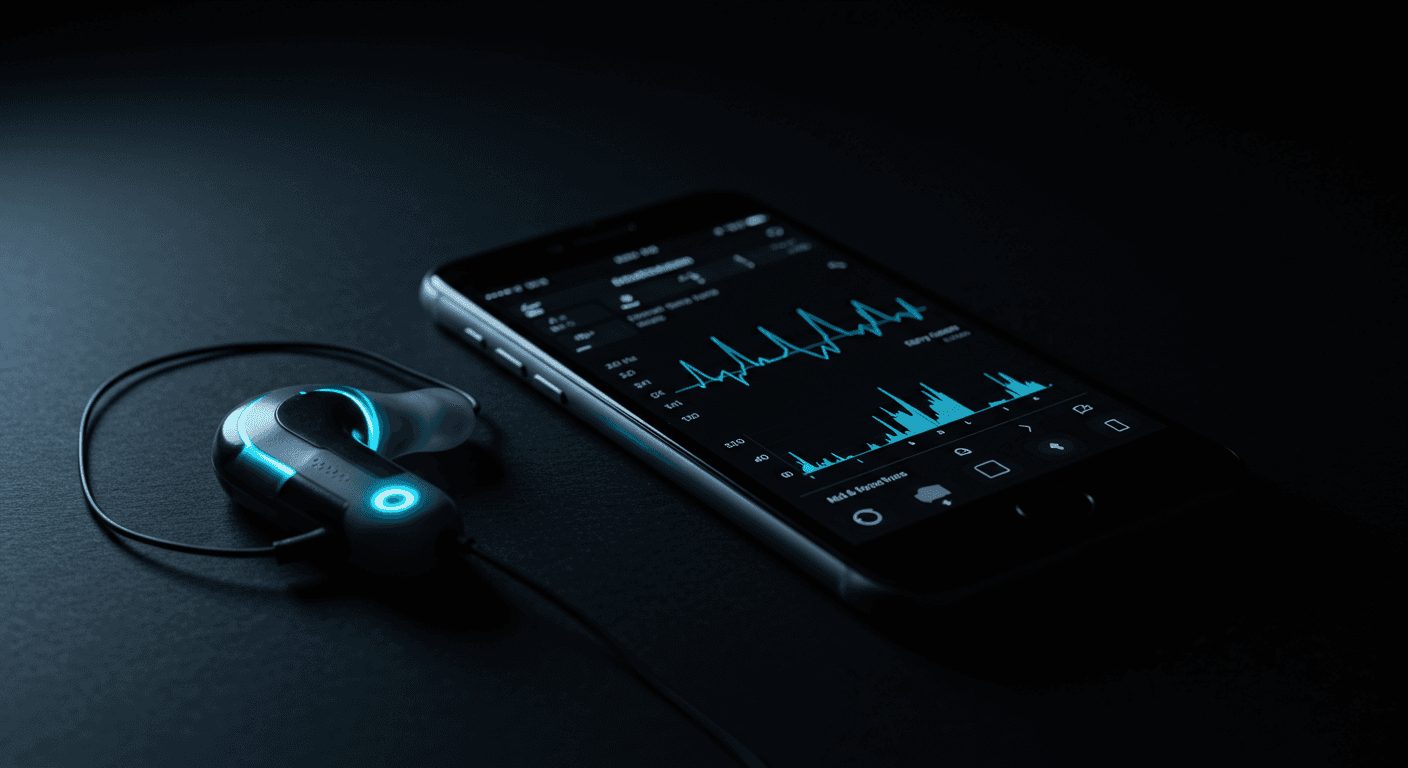
Transcutaneous vagus nerve stimulation, or tVNS, sends gentle electrical pulses through the skin of your ear or neck to activate this nerve directly. No visualization required. No deep breathing. No subscription fee.
The 4-week trial that changed the conversation
Researchers ran a randomized controlled trial with 18 elite athletes, giving half of them a VNS device for 30 minutes daily over four weeks. The results were striking: the stimulation group showed significant reductions in perceived stress (p < 0.01), cognitive anxiety (p < 0.001), somatic anxiety (p < 0.01), and depression (p < 0.01), while also gaining a measurable boost in confidence (p < 0.001).
These weren't self-reported "I feel calmer" surveys. These were validated psychometric instruments showing statistically significant changes across every single measure.
A separate 12-month, sham-controlled trial across 84 clinical sites confirmed that VNS improved depressive symptoms, quality of life, and daily functioning in people with treatment-resistant depression. The device used in that study was implanted surgically, but the newer transcutaneous versions deliver stimulation through the skin with no procedure needed.
What meditation apps actually deliver
Let's be fair: meditation apps aren't useless. A meta-analysis of 28 randomized controlled trials found that apps like Headspace produce small but real reductions in anxiety and depression symptoms. The key word is small. Effect sizes were modest, and the improvements came primarily from changes in repetitive negative thinking and attention regulation, not from any direct activation of the vagus nerve or parasympathetic pathways.
This matters because the marketing tells a different story. When an app promises to "activate your vagus nerve through guided breathing," it's borrowing the language of neuroscience without the mechanism to back it up. Deep breathing can influence heart rate variability indirectly, but the clinical data shows it doesn't produce the same measurable vagal activation as electrical stimulation.
Why combining them might backfire
Here's the counterintuitive part. You might assume stacking a VNS device with your meditation app would double the benefits. Early research suggests otherwise. A 2024 clinical trial protocol studying combined VNS and mindfulness training for migraine patients is investigating whether the two interventions interact, and preliminary observations suggest the relaxation response from meditation may actually reduce the neural contrast that makes VNS effective.
Think of it like taking a stimulant and a sedative at the same time: the signals compete rather than complement. Researchers are still studying this, but the early signal is clear enough to pause before assuming more is better.
The cost math nobody mentions
A premium meditation app typically runs around $70 per year in the US. A consumer tVNS device (like an ear-clip model) costs roughly $250 to $300 as a one-time purchase, with no ongoing subscription. Over three years, the app costs $210 with zero clinical evidence of vagal nerve activation. The device costs a similar amount with multiple randomized trials showing measurable stress-hormone reduction.
The comparison isn't just about price. It's about what your money is actually buying: subjective relaxation versus a documented biological response that shows up in your saliva samples.
What to do with this information
If you're currently using a meditation app and feeling genuine benefit, that's real. Subjective wellbeing matters. But if you've been meditating for months and still feel like your stress response hasn't fundamentally changed, it might be because you've been training your mind while leaving your nervous system hardware untouched.
The vagus nerve doesn't respond to intentions. It responds to electrical signals. And for the first time, you don't need surgery to send them.
- #vagus nerve stimulation
- #tVNS device
- #meditation app comparison
- #cortisol stress reduction
- #vagus nerve stimulator
- #transcutaneous nerve stimulation
- #stress management device
Sources and References
- Physiological Reports (Wiley) — Cortisol rose only 49.5% above baseline during taVNS versus 106% during sham stimulation (p < 0.05), demonstrating that transcutaneous auricular vagus nerve stimulation inhibits mental stress-induced cortisol release.
- MDPI Applied Sciences — 4-week RCT with 18 elite athletes: VNS 30min/day produced significant reductions in stress (p < 0.01), cognitive anxiety (p < 0.001), somatic anxiety (p < 0.01), and depression (p < 0.01), plus increased confidence (p < 0.001).
- PMC / Frontiers — Meta-analysis of 28 RCTs found mindfulness apps produce only small effect sizes on depression and anxiety, with improvements from attention regulation and reduced repetitive thinking, not vagal nerve activation.
- PMC / Frontiers in Neuroscience — Meta-analysis of 19 RCTs found mindfulness-based interventions were NOT efficacious in increasing vagally-mediated resting-state heart rate variability compared to controls.
- Washington University School of Medicine — 12-month sham-controlled trial across 84 sites showed VNS improved depressive symptoms, quality of life, and daily functioning in treatment-resistant depression patients.
Read about our editorial standards →